Trauma is the renewable resource.
But there's good news: that system is ending.

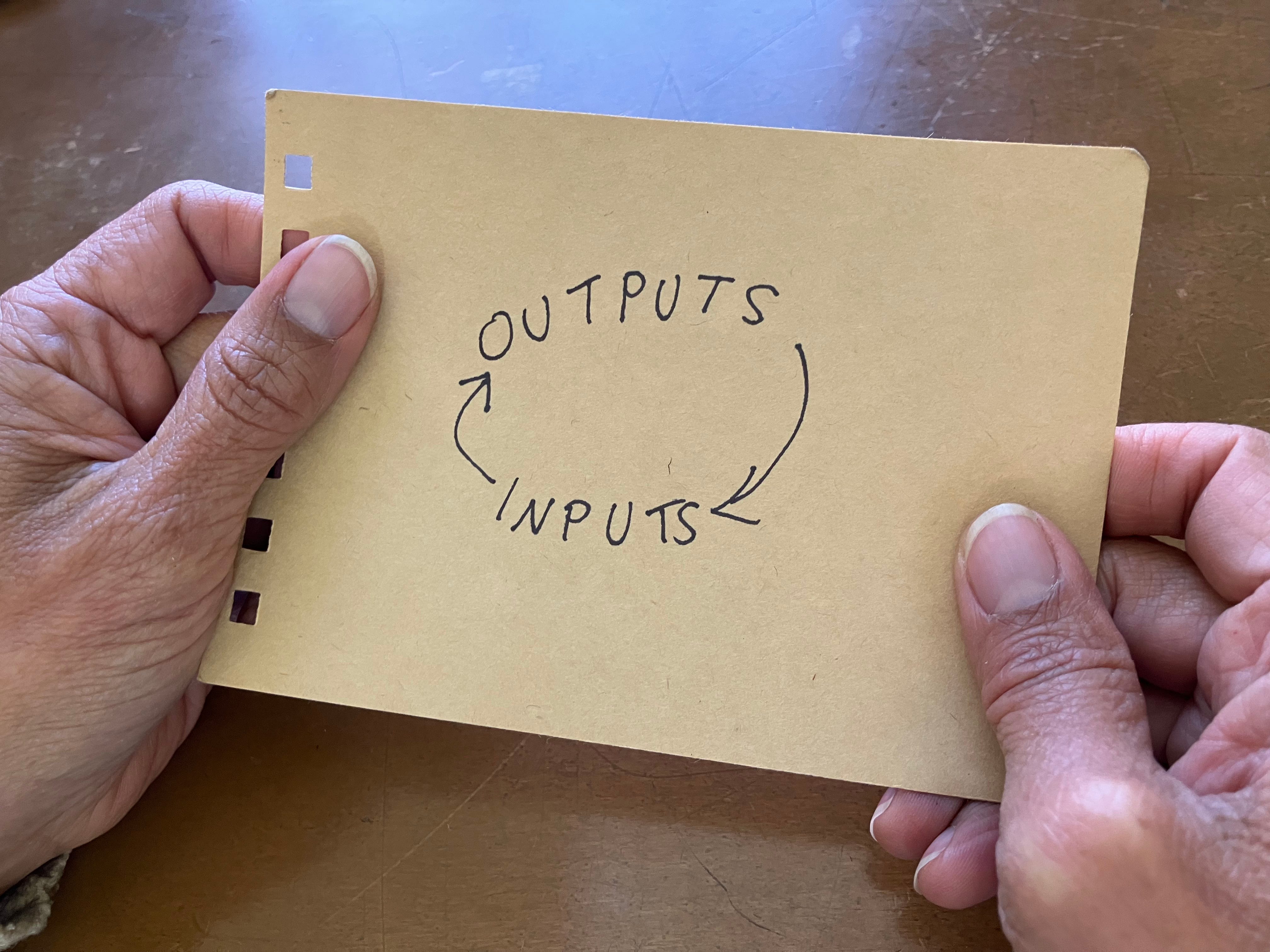
Some years ago, I took a permaculture design course. For one exercise, index cards were distributed, each with a principle of permaculture written on it. Our assignment was to come up with an example of how we see that principle operating. The card I received read: Outputs are Inputs. Reflecting on this principle led to one of the most important insights I have had about the systems we have been operating under: trauma is the renewable resource.
We have been living within an ecocidal-system, one that functions by separation, extraction, oppression, consumption, and destruction of life at every level. The most effective trick of this system is that we voluntarily participate in it. We voluntarily (if deceptively) separate our minds from our bodies and our bodies from nature. We righteously isolate ourselves from family members and neighbors who have the “wrong” opinions. We are consumed by our little glass screens, which makes us the perfect consumers: helpless, hopeless, overwhelmed and only soothed by more consumption.
The great news is that natural systems do not great effort to work. They do not need human analysis, engineering, and energy intensive inputs in order to function. Only unnatural systems require such energy intensive strategies. The natural system that you already are and belong to requires only that you unplug from what’s been disrupting it. Once you withdraw your attention and energy from the ecocidal system, life-force will regenerate you.
“But what do you mean when you say only unnatural systems require energy intensive strategies? We need to work. We need to solve problems and design things. That takes a lot of energy.”
I will respond to this very reasonable question by looking the field I know best. As an educator, the world of mainstream education has been a major contributor to the ecocidal system. I am not saying that teachers themselves are consciously causing harm. The teachers I know and work with have only the best of intentions - but I could write at length about how people with good intentions participate in systems that cause harm.
Let’s look at a very specific fractal of education: how teachers are treated. Teachers are required to go through training and certification, but once they get in the classroom, they are not celebrated for their unique gifts or contributions to their field. The system is only interested in how well they comply to the directives of the system.
Teachers who think for themselves, or encourage their students to think for themselves, may have a window in which they experience a generative and creative classroom, but as any teacher who has worked for more than a year can tell you that window will quickly close when the next new “advancement” is authorized.
And finally, even if a single teacher can manage to create a bubble of genuine inquiry and engagement for their students, that teacher can do very little to meaningfully respond to the social conditions of their student’s lives. Ultimately, this overwhelms whatever is happening in the classroom.
I have just described a system that drains life-force energy, it does not regenerate it. But don’t be confused. This is not “just how it is”, this is intentional. How do I know? First, because every educator I work with desires to be in a generative field. They want to contribute their energy and creativity to responding the challenges that their school community faces. So the educational system is populated by people who would gladly be a force for positive change. The other reason I know this system is intentional is because natural systems are coherent. They possess a natural drive towards health. It is not random or bureaucratic - a natural system will seek harmony and evolution. Yes, there is work as in, forces that move things, but a coherent system is regenerative. Work is returned with greater connection, happiness, joy, satisfaction, and peace.
Natural abundance and regeneration is available to us. But it won’t be found when we’re plugged into systems of separation.